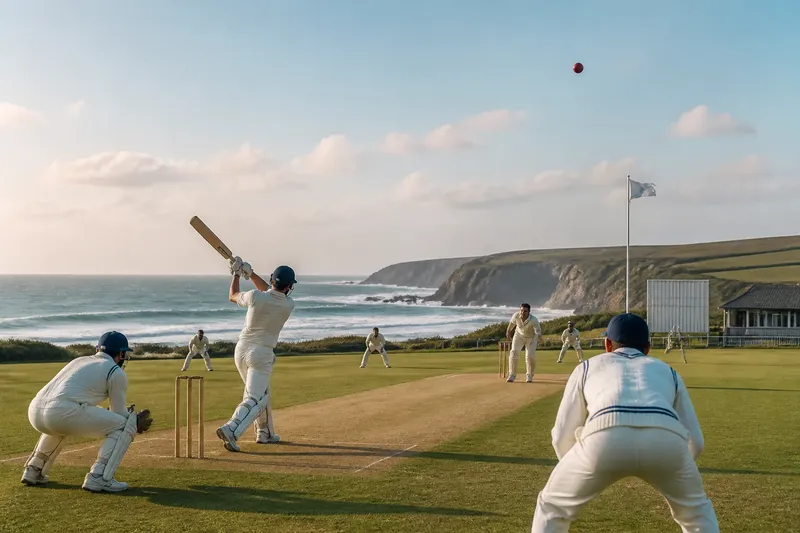
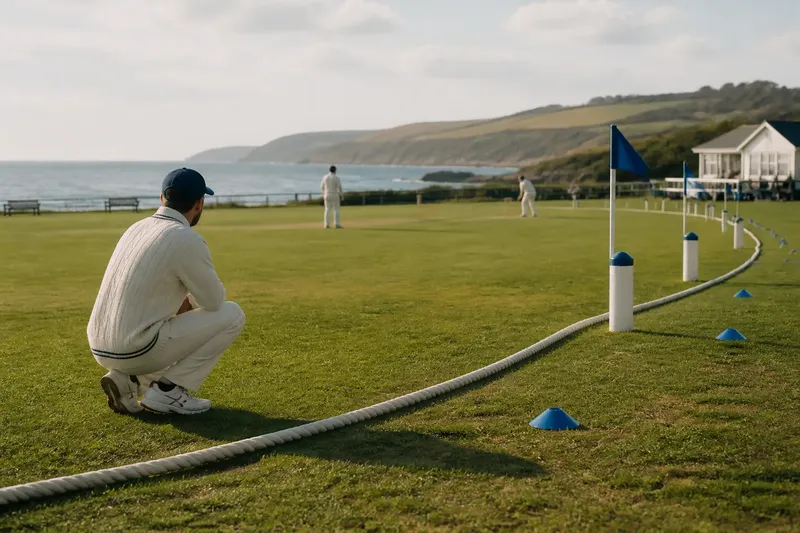
A First Day at a Coastal Cricket Ground
A first day at a coastal cricket ground is easier with a simple viewing plan: choose a comfortable seat, follow field changes and take breaks well.

A first day at a coastal cricket ground goes better when you choose your viewing spot for comfort, then let the match explain itself. You do not need to memorise cricket’s laws before arriving; a few practical cues will help you follow the action, notice why the field shifts and step away without losing the thread.
Seaside grounds can be open to bright sun, passing showers and gusts, while their seating may range from a small stand to a grassy bank. Treat the day as a sequence of easy decisions rather than a test of cricket knowledge. Start by checking what the venue allows, bring a compact set of useful items and settle where you can see both the pitch and the larger field.
Choose a seat you can stay in comfortably
Before picking a place, look at the sun’s direction, the available shade, the route to the toilets and refreshments, and whether you can see the pitch without standing in front of other spectators. A seat near an aisle or a clear path is useful if you expect to take breaks. On a grass bank, check that the ground is dry and that you can sit without blocking anyone’s view.
Do not assume the most popular spot is the best one for a first visit. A central view often makes it easier to watch the bowler, batter and fielders together, while a position closer to the boundary can make catches and running easier to see. If one side is exposed, a sheltered position may be more pleasant even if it offers a less direct angle.
Say you arrive at a seaside club on a sunny morning and find the first row beside the boundary crowded. You choose an open seat farther along the bank, with shade nearby and a clear view of the pitch. The expected result is a calmer place to watch, with room to move if the light or weather changes.
Keep a light layer within reach rather than dressing only for the conditions at the gate. A cap, water and a cushion can make a long spell of watching easier; a small bag also leaves your hands free. Check the ground’s own guidance for permitted items and seating arrangements, since venue rules and product instructions vary.
Find the match’s basic rhythm before tracking details
At the start, identify which side is batting and which is fielding. The batting side sends two players onto the pitch, while the fielding side places its players around them and sends a bowler in to deliver the ball. The aim for the batting side is to score runs; the fielding side tries to limit those runs and dismiss the batters.
Watch one delivery at a time. The bowler runs or walks in, bowls towards the batter, and the ball may be played, missed, stopped or hit into the field. After a hit, the batters may run between the wickets at either end of the pitch. A boundary hit can also score runs without the batters completing those runs, depending on how the ball reaches the boundary.
If you lose track of the score, listen for the ground announcer or look for a scoreboard. You can also ask a nearby spectator a short question during a pause: “Which side is batting?” or “What changed?” Most people can give you the immediate context without reciting every law. Keep your attention on the next delivery rather than trying to reconstruct every event.
At a stoppage, notice whether the batters change ends, whether the bowler changes, and whether the fielders move. These visible changes are often enough to tell you that the match has entered a new phase. You can follow the pattern first and learn the terminology as it becomes useful.
Read field changes as clues, not a quiz
Fielders are placed in different parts of the ground to stop runs or catch the ball. Their positions can change after a batter’s shot, after a wicket, or when the bowler and captain decide to try a different approach. You do not need to know each position’s formal name to notice what the team is attempting.
Look for the broad shape. Several fielders close to the batter may suggest pressure or an attempt to catch a mis-hit. A deeper line of fielders may be intended to stop a ball travelling towards the boundary. If one side of the field looks more crowded than the other, the bowler may be trying to direct the batter towards that area.
When the field shifts, compare the next few deliveries with the arrangement before it changed. Did the batter play towards a different part of the ground? Did the fielders move back after a strong shot? This simple observation makes the game easier to follow without requiring a judgement about whether a captain’s choice is right.
Keep your eyes on the ball during play, especially when it is hit high or towards a crowd. A ball can travel quickly, and spectators should follow any instructions from ground staff. If you are unsure where it has gone, wait for the fielders and players to show you rather than stepping into a restricted area.
Handle weather, glare and interruptions without losing your place
Coastal weather can alter how comfortable a seat feels over the course of a match. Sun may move across an open stand, a breeze can make a warm-looking day feel cool, and a shower may send spectators towards cover. Check the forecast before leaving home, but pack for changing conditions rather than relying on a single prediction.
If glare makes the ball difficult to see, shift your head or seat if there is room, use a cap or suitable sunglasses, and avoid staring at the bright sky while the players are getting ready. If a shower begins, protect your belongings and move to the venue’s permitted covered area. Do not take shelter in a place reserved for players, officials or staff.
A delay is a natural point to check the scoreboard, refill water or use the facilities. If play resumes while you are away, ask a companion or spectator what happened, then pick up from the current batter and score. There is no need to catch up on every delivery you missed.
For a longer spell in exposed seating, take a short break before discomfort makes it difficult to enjoy the match. Choose a natural pause, such as a change of innings or a scheduled interval, when practical. If you feel unwell, move to a suitable place and seek help from venue staff.
Sort out common first-day snags in a sensible order
- You cannot see the pitch clearly. Check whether a standing spectator, post or temporary structure is blocking your view. If the venue permits movement, choose another seat with a clear line of sight rather than leaning into an aisle.
- You are unsure who is batting. Look at the scoreboard or ask during a pause. Once you know the batting side, watch the two batters and the bowler to regain the match’s basic rhythm.
- The ball disappears from view. Follow the players’ reactions and the crowd’s attention, then watch where the fielders gather. Do not leave your seat in search of the ball while play is live.
- You have lost track after a break. Check the current score and identify the batter facing the bowler. That gives you enough context to follow the next passage without retracing everything.
- Your seat has become uncomfortable. Use an interval to stretch, get water or move to a more suitable place if seating rules allow. Keep your belongings together and leave pathways clear.
- You are uncertain about a call or stoppage. Listen for an announcement, watch for the umpire’s signal and ask a companion when play pauses. The visible decision is more useful than guessing from the crowd’s reaction.
What should you bring to a coastal cricket match?
How can you prepare for sun and a cool breeze?
Bring a cap, a light extra layer and water, choosing items that suit the forecast and the venue’s rules. A compact bag is easier to manage than loose belongings on a crowded bank.
Where should a first-time spectator sit?
Choose a place with a clear view of the pitch, a comfortable way in and out, and access to shade or shelter if available. An aisle or open edge can make breaks easier, provided it does not block other spectators.
What should you watch if you do not know cricket’s laws?
Follow the bowler, the batter and the fielders, then notice where the ball goes and how the field changes. The scoreboard and a brief question during a pause can fill in the context you miss.
When is the easiest time to take a break?
Use a change of innings, an interval or a weather stoppage when possible. If you need to leave at another time, wait until the ball is no longer in play and follow the venue’s routes.
Leave with a simple way to remember the match
Choose one detail to follow across the day: a batter’s scoring areas, the way fielders regroup after a shot, or how the crowd responds to a close moment. That gives your attention a thread without turning the match into homework. You can still enjoy the sound of the sea, the rhythm of the bowler’s approach and the small shifts in the crowd around you.
A first day at a coastal cricket ground is easier when you make comfort and visibility your starting points. Keep the score within reach, watch the field as it changes, and take breaks at sensible pauses. The next time you visit, those familiar cues will make it easier to settle in and notice more of the game.